Inside The Rhythm of My Heart — memory, music, and freedom beyond rules
At Rosedale United Church Hall, the room was already holding its breath.
 I was seated close to the piano—close enough to feel the wood resonate, to hear not just the notes but the air around them. The sound didn’t need to travel far; it simply unfolded. There was an intimacy in the room that felt almost conspiratorial, as if we had all been invited not to a performance, but to a remembering.
This was the world of Marc Jordan—not just the songs, but the space between them.
It is the same space he inhabits in The Rhythm of My Heart, a memoir that reads less like a chronology and more like a series of emotional coordinates. Moments gathered, examined, and—like his music—allowed to breathe.
There is a moment, reading The Rhythm of My Heart, when you realize that Marc Jordan is not simply telling stories—he is revealing pattern. Not neat, linear storytelling, but something far more organic: threads thrown outward and gathered back, like a ball of yarn cast into the unknown and reeled in again to discover what shape it has taken.
That image—one Jordan himself uses—may be the most accurate way to understand both his book and his music.
“Everything in nature has a pattern… but it’s also like throwing a ball of yarn and pulling it back to see what you get.”
It is this intuitive, almost cinematic way of thinking that has defined Jordan’s career for decades. Known for songs that feel as if they move through you rather than simply play, he has always resisted formula—not out of rebellion, but out of devotion.
“We followed the music,” he says simply. “We didn’t follow the rules.”
Breaking Rules Without Trying To
Jordan’s collaborators have described working with him as “scoring a movie that didn’t exist.” It’s an evocative phrase—and a revealing one.
In a music industry often governed by structure—verse, chorus, bridge—Jordan’s approach was something else entirely. Songs could have two bridges, or none. They could expand, contract, breathe.
Not because he set out to defy convention, but because he trusted the song itself to dictate its form.
There’s quiet confidence in that philosophy. The sense that craft, once deeply internalized, can be transcended.
Like Salvador Dalí moving from precision into surrealism, Jordan suggests that freedom only comes after discipline. The rules dissolve—not because they are rejected, but because they are no longer needed.
“Everything Is Like Something Else”
One of the most striking insights from Jordan’s book—and our conversation—is his description of perception:
“Everything is like something else to me.”
It’s a simple sentence that unlocks an entire artistic worldview.
This is the root of his metaphor-rich songwriting, the reason his music feels cinematic, almost tactile. Songs like “Coltrane Plays the Blues” or his deeply textured recordings don’t just describe emotion; they translate it into imagery, landscape, motion.
There is, perhaps, a connection here to his dyslexia, which he speaks about candidly. Rather than a limitation, it becomes a lens—one that refracts reality into something more associative, more poetic.
For Jordan, meaning is never fixed. It’s always transforming.
The Turning Point: Sammy Cahn and the Piano
One of the most pivotal revelations in The Rhythm of My Heart comes late in his journey.
Encountering the work of Sammy Cahn, Jordan realizes something profound: these songs can stand alone. Stripped of production, they still live and breathe at a piano.
His own work—lush, layered, cinematic—could not always do that.
So, he made a decision.
“I have to start writing songs I can perform stripped down… that mean the same as they do when produced.”
It marked a shift toward precision—toward lyrics that could carry the full emotional weight of the song without the scaffolding of arrangement.
“I started sweating the lyrics more,” he says.
For an artist already celebrated for nuance, this was not a reinvention—but a distillation.
Family, Memory, and the Unfinished Inheritance
If the book has a heartbeat, it is found in Jordan’s reflections on family.
There is no sentimentality, only honesty.
A father who believed without explaining.
A mother who sang privately, never publicly.
A household shaped by restraint, by what was not expressed.
“She’d go into another room, turn on the vacuum cleaner… and sing at the top of her lungs.”
It’s an image that lingers.
From it, Jordan traces a lifelong instinct: to bring joy, to make his mother laugh, to fill the emotional spaces left unspoken. Like many artists, his creativity emerges not just from talent, but from response—from the need to translate what could not be said.
And in writing The Rhythm of My Heart, he does something else: he revisits that inheritance.
Not to resolve it, but to understand it.
Marc’s choice to work with his musical collaborator Don Breithaupt was a considered one. As Don says in his forward, “Marc, profoundly dyslexic despite his many accomplishments as a lyricist, needed someone he trusted to tell his story in print.” Written in the COVID days, Don interviewed many of Marc’s colleagues and collaborators and Marc’s wife, Amy Sky. As a musical collaborator, Don also understood Marc’s unbending commitment to originality. The book with great transparency, reflects a true understanding from the inside out of Marc Jordan’s work and life.
Solitude, Excess, and the Artist’s Balance
Jordan speaks openly about the dual nature of an artist’s life—the pull between connection and solitude.
An “introverted extrovert,” he describes the exhaustion of performance culture, the pressures of industry life, and the ways he once coped.
“I started drinking and doing blow to get through those things… and that was its own nightmare.”
There’s no dramatization in the telling—just clarity.
He eventually stepped away, choosing isolation over self-destruction, and in doing so, reclaimed something essential: the ability to hear himself again.
That clarity extends into his philosophy today. When asked about emotional extremes—the swing between insecurity and confidence—his answer is unexpected.
He doesn’t aim for balance.
He aims for distance.
“You don’t want to be in the middle… I want to be out in the field, like Ferdinand the bull, smelling the flowers.”
It’s a rejection of the performative center—a return to something quieter, more grounded.
Love, Language, and the Gift of Difference
At the heart of The Rhythm of My Heart is not just music, but relationship—
to family, to memory, and most profoundly, to love.
Jordan speaks with deep affection about his life with Amy Sky, herself an accomplished and deeply respected artist. Their partnership is not framed in grand declarations, but in something quieter and more enduring: mutual understanding and deep respect.
It is, by all accounts, a grounding force.
Where Jordan’s creative mind moves associatively—intuitively, sometimes chaotically—there is a sense that Amy brings a kind of emotional and structural ballast. Not to contain him, but to steady the orbit.
That balance becomes especially meaningful when viewed through another defining aspect of Jordan’s life: his dyslexia.
Far from a limitation, it emerges in the book as a kind of hidden architecture behind his work. It is a recurring theme.
“Everything is like something else to me.”
What might be disorienting in a conventional context becomes, in Jordan’s creative world, a source of depth. Language is not fixed—it’s fluid, visual, relational. Meaning doesn’t arrive in straight lines; it arrives in images, in echoes, in patterns.
Love, Children, and a Shift in Perspective
Another profound shift in Jordan’s life came with fatherhood.
Like many artists, he found that the arrival of children didn’t just change his priorities—it changed his voice.
“The love of a child is like no other… it awakens something in you.”
Now a grandfather, Marc is awed by the laser point focus of mother and child and the overwhelming joy at seeing his daughter Zoe, and grandchild Sylvie, together. “it’s beyond…”, he says.
Where earlier work may have reached outward, later writing turns inward—then outward again, but from a place of deeper understanding.
It’s no longer about expression for its own sake. It becomes, instead, a form of service.
Music, History, and the Present Moment
Jordan is also a keen observer of culture—of cycles, of rise and collapse, of renewal.
He reflects on the period between the late 1940s and the late 1970s as a kind of renaissance—a time when music didn’t just reflect the world but helped shape it.
And today?
He sees crisis—but also possibility and a new renaissance.
“It’s a scary time, but it’s an exciting time… a great time to be alive.”
There’s grounded optimism in that perspective. Not naïve but earned.
The Last Word
At the back of the book are the appendices by Amy, Zoe and Ezra Jordan. These really moved me to tears with their honesty and love for this man Marc Jordan who is, to them a husband and a father as well as the Renaissance man he is revealed to be in the book.
In the end, Marc Jordan is still doing what he has always done—
following the thread.
Not forcing it.
Not naming it too soon.
Just letting it lead him—through memory, through love, through the beautifully altered lens of how he sees the world.
And somewhere in that quiet unfolding,
held by those who know him best,
the song becomes more than sound.
It becomes a way of understanding—
and, finally, a way of being understood.
What emerges most clearly from both the book and the man is this:
Marc Jordan has never been interested in control.
He is interested in discovery.
In following the thread wherever it leads.
In trusting the song more than the structure.
In allowing life—messy, unresolved, patterned and unpatterned—to become the work.
And perhaps that is why his music endures.
Because it does not insist.
It reveals.
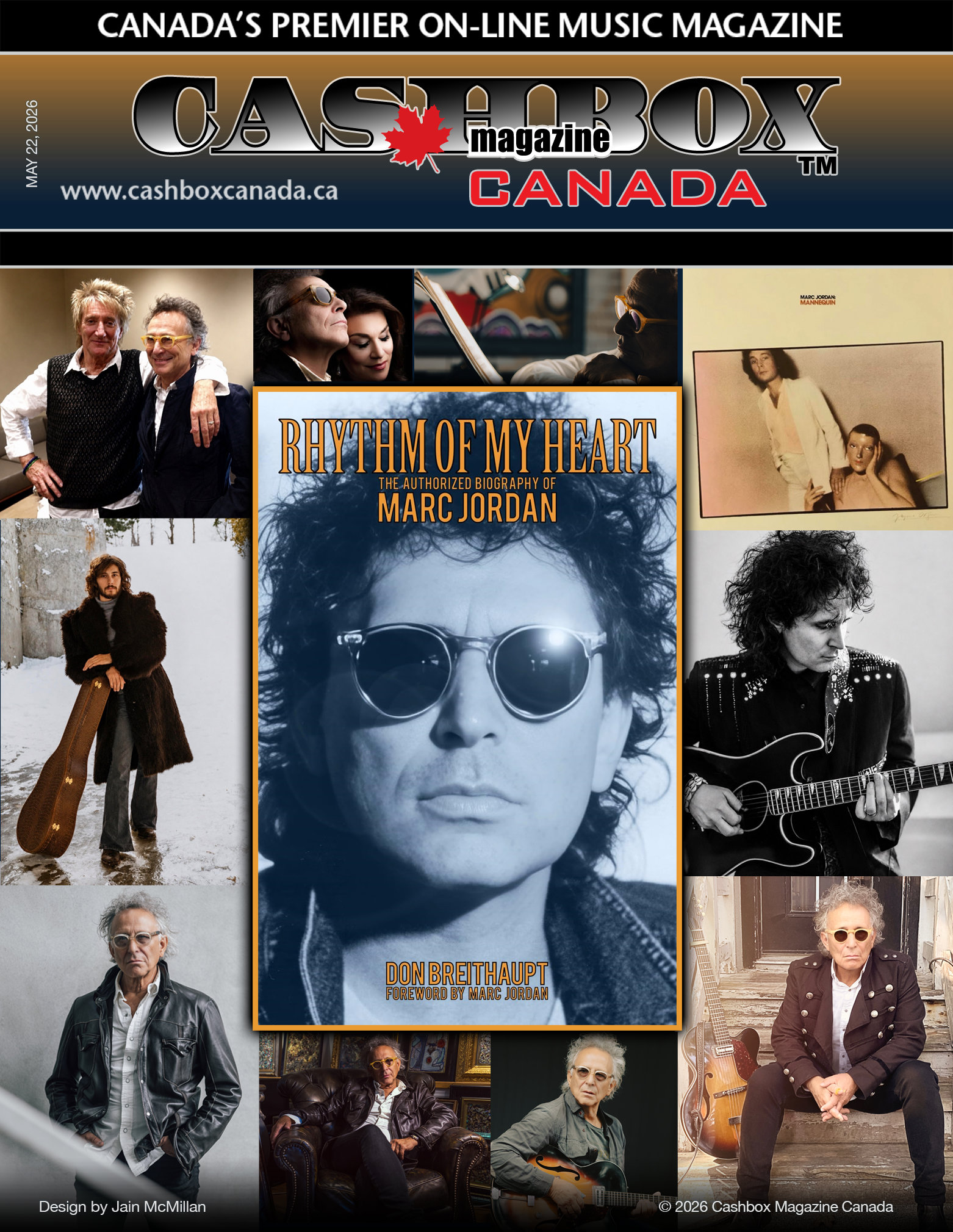
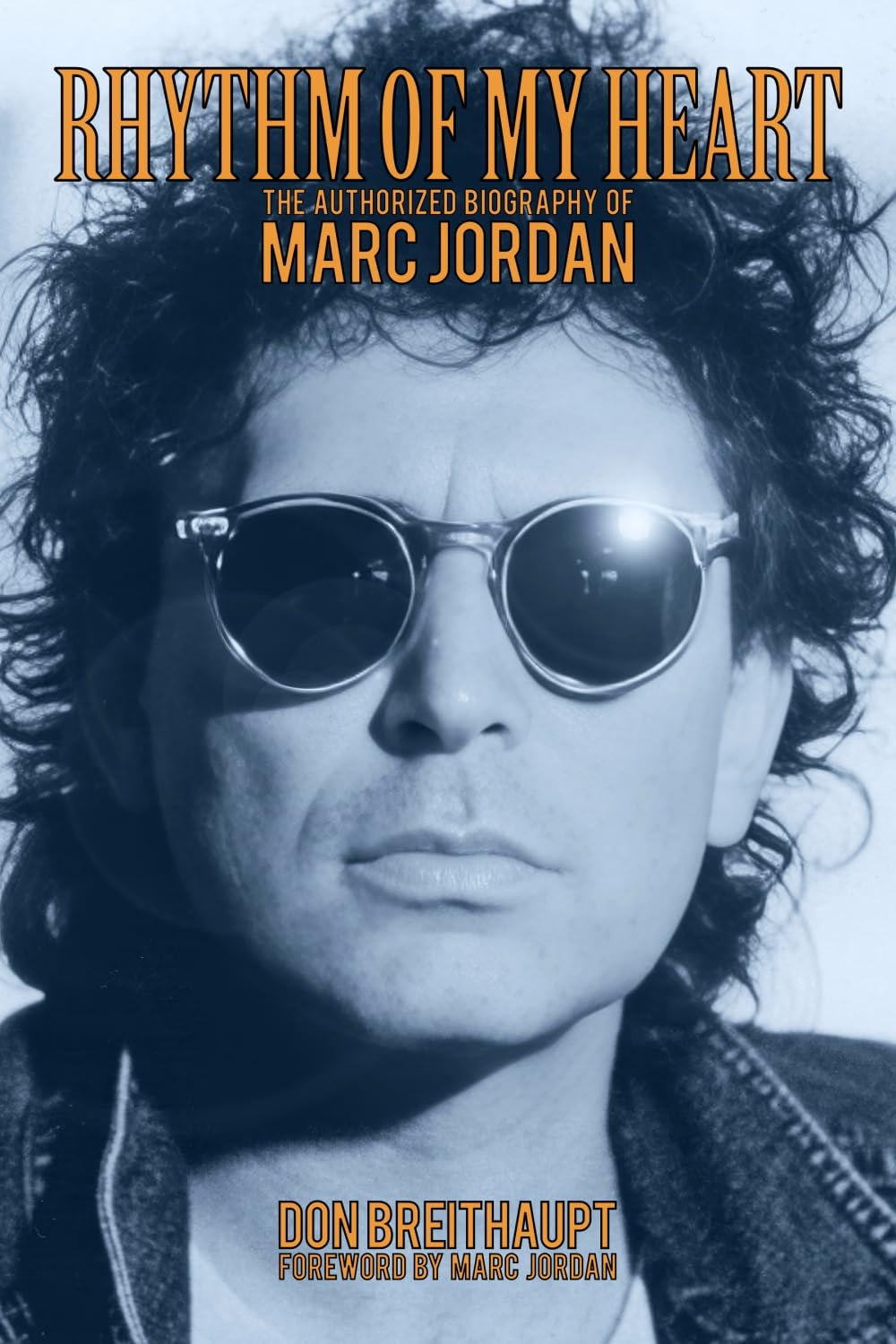
Editor’s Note: Rhythm of My Heart: The Authorized Biography of Marc Jordan, a deep-dive exploration of a career that has shaped the sound of popular music for over fifty years. Written by Don Breithaupt and available now, this book offers an unprecedented look at the Brooklyn-born, Toronto-raised legend whose songs have sold over 35 million units and defined the uncompromising quality that is the hallmark of a true visionary. Purchase the book on Amazon here: Rhythm of My Heart: The Authorized Biography of Marc Jordan: Breithaupt, Don: 9781069830609: Books - Amazon.ca
marcjordan.com
marcjordan.bandcamp.com/album/on-a-perfect-day
facebook.com/marcwjordanmusic
instagram.com/marc_jordan_music